


As a supplier of PLLA fillers, I'm well - versed in the world of aesthetic enhancements. PLLA, or Poly - L - lactic acid fillers, have gained significant popularity in the cosmetic industry for their long - lasting volumizing effects and ability to stimulate collagen production. However, one of the challenges that can arise with the use of PLLA fillers is asymmetry. In this blog, I'll delve into the causes of asymmetry after PLLA filler treatment and share effective ways to correct it.
Understanding the Causes of Asymmetry with PLLA Fillers
Before we discuss the solutions, it's crucial to understand why asymmetry might occur in the first place.
Inconsistent Injection Technique
The skill of the injector plays a vital role. If the PLLA filler is not injected evenly, one side of the face may receive more product than the other. This could be due to improper assessment of the facial contours, inaccurate needle placement, or inconsistent pressure during injection. For instance, if the injector fails to distribute the filler in a uniform pattern, it can lead to uneven volume restoration, resulting in noticeable asymmetry.
Varying Tissue Response
Everyone's body reacts differently to PLLA filler. The rate of collagen production can vary from one side of the face to the other. Factors such as blood flow, metabolic rate, and existing tissue health can influence how the body breaks down and utilizes the filler. Some areas may have a more robust inflammatory response, leading to more significant collagen synthesis and volume increase compared to others.
Post - Treatment Activities
Patients' post - treatment behaviors can also contribute to asymmetry. Sleeping on one side of the face, excessive facial massage on one side, or exposure to extreme temperatures can disrupt the normal distribution and integration of the PLLA filler. For example, if a patient consistently sleeps on the right side of their face, the filler on that side may settle differently, causing an imbalance.
Methods to Correct Asymmetry Caused by PLLA Filler
Additional Injections
- Assessment and Planning: The first step is a thorough assessment by a qualified aesthetic professional. They will examine the patient's face to determine the exact areas of asymmetry and the amount of additional filler required. Using imaging tools or simply visual inspection, they can create a personalized treatment plan.
- Precise Injection: Once the plan is in place, the injector will carefully administer small amounts of PLLA filler to the areas that need more volume. The goal is to achieve a balanced and natural - looking result. The injection technique should be more precise than the initial treatment, taking into account the existing filler distribution. For example, micro - injections can be used to fine - tune the volume and contour.
It's important to note that additional injections should be done gradually. Over - correcting by injecting too much filler at once can lead to an unnatural appearance and further complications. Often, multiple sessions may be required, with a waiting period of several weeks between each session to allow the body to adapt to the new filler.
Hyaluronidase Treatment (if applicable)
Although PLLA is not reversible like hyaluronic acid fillers with immediate dissolving agents, in some cases where there is over - correction on one side, and if there is co - injection of hyaluronic acid along with PLLA (such as in Plla Hyaluronic Acid Filler), hyaluronidase can be used to selectively reduce the volume contributed by the hyaluronic acid component.
- Determination of Use: The aesthetic provider will first need to confirm that there is an appropriate amount of hyaluronic acid mixed in the filler and that reducing its volume will help correct the asymmetry.
- Procedure: A small amount of hyaluronidase is injected into the areas with excessive fullness. The enzyme works by breaking down the hyaluronic acid molecules, gradually reducing the volume. This process is closely monitored, and multiple small injections may be needed to achieve the desired result.
Mechanical Manipulation
- Facial Massage: Gentle facial massage can sometimes help redistribute the PLLA filler. Patients can be instructed on how to perform a self - massage at home, following specific guidelines provided by their aesthetician. The massage should be done in a circular motion, avoiding excessive pressure that could damage the tissue. However, this method is more effective in the early stages after treatment, when the filler is still in the process of settling.
- External Devices: In some cases, devices such as ultrasound or radiofrequency can be used to manipulate the tissue around the filler. These devices can increase blood flow and promote better distribution of the filler. For example, low - intensity ultrasound can be applied to the affected areas, which may help loosen the filler and allow it to spread more evenly.
Collagen - Modulating Therapies
- Topical Treatments: Certain topical creams and serums containing ingredients such as retinol, vitamin C, and peptides can be used to modulate collagen production. By applying these products to the areas with less volume, it may be possible to stimulate collagen synthesis and gradually correct the asymmetry. These products work by promoting cell turnover and enhancing the body's natural collagen - producing mechanisms.
- Laser and Light Therapies: Laser and light - based treatments, such as fractional laser resurfacing or intense pulsed light (IPL), can also be beneficial. These therapies can stimulate the production of new collagen in the skin. When targeted at the areas with less volume, they can help improve the overall symmetry of the face. However, these treatments should be used with caution, as they can cause some temporary side effects such as redness, swelling, and peeling.
Preventing Asymmetry in the First Place
While we've discussed ways to correct asymmetry, prevention is always better than cure.

Proper Patient Assessment
Before the initial treatment, the injector should conduct a comprehensive assessment of the patient's face. This includes analyzing the facial symmetry, skin quality, and bone structure. By understanding the patient's natural facial contours, the injector can develop a more personalized treatment plan that takes into account potential areas of imbalance.
High - Quality Products
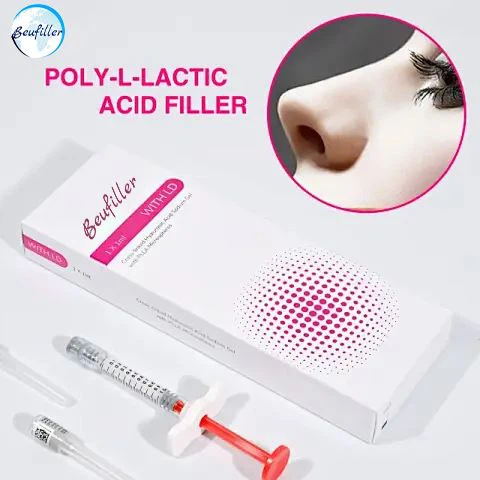
As a PLLA filler supplier, I always emphasize the importance of using high - quality products. Inferior fillers may have inconsistent particle sizes or imbalanced chemical compositions, which can increase the risk of asymmetry. Our Plla Hyaluronic Acid Filler is rigorously tested to ensure uniformity and safety, reducing the likelihood of uneven results.
Experienced Injectors
Patients should always choose an experienced and qualified injector. An experienced professional is more likely to have a better understanding of facial anatomy and the proper injection techniques. They can make more accurate adjustments during the procedure to minimize the risk of asymmetry.
Contact for Purchase and Consultation
If you're in the aesthetic industry or a professional in need of high - quality PLLA fillers, I encourage you to reach out for more information. Whether you're interested in our Plla Hyaluronic Acid Filler or have questions about how to prevent or correct asymmetry, I'm here to assist you. Contact us to start a discussion about purchasing our products and to learn more about the latest techniques in filler application.
References
- Riviera, M. A. (2018). Poly - L - lactic acid: an update. Facial Plastic Surgery Clinics of North America, 26(1), 71 - 76.
- Goldberg, D. J., & Rothman, M. S. (2018). Poly - L - lactic acid: a long - acting biodegradable facial filler. Journal of Drugs in Dermatology, 17(1), 47 - 51.
- Aubin, F. A., & Bernard, F. (2015). Poly - L - lactic acid for facial rejuvenation: clinical experience and histological considerations. Journal of cutaneous and aesthetic surgery, 8(2), 67 - 72.


