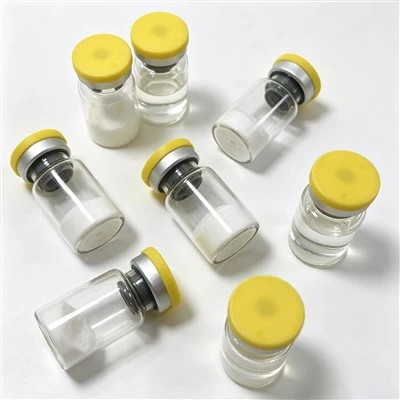
One of the biggest advantages of hyaluronic acid (HA) dermal fillers compared to PLLA, CaHA, or silicone fillers is full reversibility. Many new practitioners and clinic clients worry about irreversible filler lumps, overfilling, asymmetry, or post-injection complications. The good news is that all cross-linked HA fillers can be safely dissolved and corrected with hyaluronidase, a specialized medical enzyme widely used in aesthetic clinics worldwide.
This comprehensive guide explains how hyaluronidase works, which HA fillers dissolve best, standard clinical dosages, safe injection protocols, risk prevention, and common FAQs. It serves as a professional reference for medspa practitioners, clinic owners, and wholesale filler distributors.
1. Can All HA Fillers Be Dissolved Completely?
Yes, all cross-linked hyaluronic acid dermal fillers are dissolvable with medical-grade hyaluronidase. No matter if it is monophasic, biphasic, low-swelling, high-density, or facial/body HA filler, hyaluronidase can break down the cross-linked HA molecular structure.
However, dissolution speed and required dosage vary by HA type:
- Biphasic HA Fillers: Dissolve faster with lower hyaluronidase dosage due to their particle-gel mixed structure and lower cross-linking density.
- Monophasic Cohesive HA Fillers: Feature uniform dense cross-linking, requiring standard to slightly higher enzyme doses for complete dissolution, with more stable and thorough correction results.
- Highly Cross-Linked Body HA Fillers: Need targeted high-dose protocols for full breakdown due to enhanced structural stability for body volumization.
Non-cross-linked HA (used for mesotherapy) dissolves naturally in days without enzyme intervention, while cosmetic cross-linked HA requires hyaluronidase for rapid, manual correction.

1.1 Different HA Fillers Respond at Different Speeds
Although all cross-linked hyaluronic acid fillers are reversible, their response to hyaluronidase is not identical. Several technical characteristics influence how quickly the filler breaks down, including cross-link density, gel cohesivity, particle structure, and injection depth.
Generally speaking:
- Low-density lip and fine-line fillers respond rapidly and often require lower enzyme doses.
- Medium-density facial fillers dissolve predictably with standard clinical protocols.
- Highly cohesive monophasic fillers may require additional enzyme contact time due to their uniform gel network.
- High-density body fillers usually require staged dissolution because of their stronger three-dimensional cross-linked structure.
Understanding these differences helps practitioners customize treatment protocols while minimizing unnecessary enzyme usage and preserving surrounding healthy tissue.
2. What Is Hyaluronidase & How Does It Work?
Hyaluronidase is a natural endoglycosidase enzyme approved for aesthetic and medical use. Its core function is to hydrolyze the β-1,4 glycosidic bonds of hyaluronic acid molecules, breaking large cross-linked HA gel chains into small, water-soluble fragments that are naturally metabolized and excreted by the human body within 24–72 hours.
Beyond dissolving fillers, hyaluronidase also increases tissue permeability, improves local blood circulation, and relieves edema, making it a first-line solution for both cosmetic correction and emergency filler complication management.
Common medical-grade hyaluronidase formulations for aesthetics include recombinant human hyaluronidase and purified animal-derived hyaluronidase, all designed for safe subcutaneous injection use.
Additional Clinical Applications
Besides cosmetic filler correction, hyaluronidase is widely used in emergency aesthetic medicine. It can improve tissue perfusion during suspected vascular compression, enhance the dispersion of injected medications, and reduce localized edema caused by excessive HA accumulation. These additional medical applications further demonstrate why hyaluronidase remains an indispensable product in every professional aesthetic clinic.
3. Standard Clinical Dissolution Dosage Guide
Precise dosage is critical to avoid under-dissolution (residual lumps) or over-treatment (unnecessary tissue dryness). Professional clinical reference dosages are as follows:
- Basic Correction (Overfilling, Asymmetry, Tyndall Effect): 300–500 units of hyaluronidase per 1ml standard HA filler
- High-Density Monophasic & Body HA Fillers: 600–750 units per 1ml filler for complete dissolution
- Emergency Treatment (Vascular Occlusion Risk): High-dose pulsed injection protocol for immediate HA breakdown to restore blood flow
For subtle adjustments (such as minor tear trough overfilling), low-dose micro-injection is recommended to preserve normal tissue volume while removing excess filler.

| HA Filler Type | Cross-Link Density | Dissolution Difficulty | Typical Hyaluronidase Requirement |
|---|---|---|---|
| Lip Filler | Low | Easy | Low |
| Fine Line Filler | Low | Easy | Low |
| Tear Trough Filler | Low–Medium | Moderate | Moderate |
| Cheek Filler | Medium | Moderate | Moderate |
| Chin & Jawline Filler | High | Higher | High |
| Body Filler | Very High | Highest | Highest |
4. Common Scenarios for HA Filler Dissolution
Hyaluronidase correction is widely applied in daily aesthetic clinic operations, covering almost all unsatisfactory HA filler outcomes:
- Post-injection overfilling: Puffy lips, bulging tear troughs, unnatural fullness on cheeks
- Asymmetry & contour irregularity: Uneven filler distribution leading to facial imbalance
- Tyndall effect: Blue-gray discoloration under thin periorbital skin caused by superficial HA injection
- Nodules & lumps: Hard masses formed by uneven gel aggregation
- Mild swelling & persistent edema: Long-term puffiness caused by high-hydrophilic HA
- Emergency complication intervention: Early intervention for vascular compression risk to ensure patient safety
Typical Patients Seeking Filler Dissolution
Although emergency complications are relatively rare, most hyaluronidase treatments are performed for aesthetic refinement rather than medical necessity.
Typical cases include:
- Patients who feel their lips are overfilled after swelling subsides.
- Clients requesting a more natural facial appearance.
- Individuals switching from an older filler to a newer product.
- Patients preparing for secondary facial contour correction.
- Revision treatments performed before combination procedures such as fat grafting or facelift surgery.
These situations highlight the importance of HA fillers' reversibility, giving both practitioners and patients greater confidence during treatment planning.
5. Safe Dissolution Process & Recovery Timeline
Step 1: Professional Assessment
Practitioners confirm filler type, injection depth, dosage, and problematic areas to customize hyaluronidase dosage and injection points, avoiding blind full-area dissolution.
Step 2: Micro-Injection Administration
Dilute medical-grade hyaluronidase with sterile normal saline, adopt multi-point micro-injection or fanning technique to ensure full contact between enzyme and residual HA gel.
Step 3: Natural Metabolism & Observation
Partial dissolution effect can be observed within 6–12 hours; complete metabolism is finished within 1–3 days. No incision or long downtime is required.
Step 4: Secondary Adjustment (If Needed)
If residual filler remains after 72 hours, a second low-dose dissolution treatment can be performed. For optimal aesthetic results, re-filling can be arranged 1–2 weeks after complete recovery.
Typical Recovery Timeline
| Time After Dissolution | Expected Changes |
|---|---|
| 6–12 Hours | Initial reduction in filler volume |
| 24 Hours | Noticeable softening of treated area |
| 48–72 Hours | Most HA completely metabolized |
| 1 Week | Swelling fully resolved and tissue stabilized |
| 1–2 Weeks | Suitable time for secondary filler treatment if desired |
6. Safety Risks & Preventive Measures
Hyaluronidase is highly safe for clinical use, but improper operation may cause minor side effects. Standardized operation can avoid all risks:
- Temporary redness & swelling: Normal reaction, subsides within 1–2 days with cold compress care
- Local tenderness: Caused by micro-injection stimulation, no long-term impact
- Excessive dissolution: Avoid over-dosage; precise dosing retains normal subcutaneous hyaluronic acid and tissue elasticity
- Allergic reaction: Adopt medical-grade purified hyaluronidase and conduct skin testing for sensitive patients
Key safety reminder: Only professional medical practitioners are allowed to perform hyaluronidase dissolution; non-medical operation may lead to uneven correction or tissue damage.
Professional Clinical Recommendations
To achieve predictable and safe dissolution results, experienced injectors generally recommend:
- Always identify the original filler type whenever possible.
- Begin with conservative enzyme dosage and reassess after 48–72 hours.
- Avoid unnecessary complete dissolution when only minor correction is required.
- Maintain detailed treatment records for future adjustment procedures.
- Educate patients that partial swelling immediately after hyaluronidase injection is temporary and not a treatment failure.
These standardized protocols help maximize aesthetic precision while minimizing unnecessary tissue trauma.
7. FAQ – Professional HA Dissolution Questions
Q1: Can cross-linked HA fillers be 100% dissolved?
A: Yes. Medical-grade hyaluronidase can completely decompose all cross-linked HA filler structures without permanent residue, which is the core reversible advantage of HA fillers over non-dissolvable aesthetic fillers.
Q2: Does hyaluronidase dissolve the body's natural hyaluronic acid?
A: Temporary and mild effect only. The enzyme mainly targets concentrated cross-linked HA filler gel. Natural skin HA will recover quickly after metabolism, and no skin sagging or dryness will occur with standard clinical dosage.
Q3: How long after filler injection can I dissolve it?
A: Dissolution can be performed at any time after injection, including immediate emergency intervention and long-term residual lump correction months later. Fresh HA fillers dissolve faster than fully stabilized old fillers.
Q4: Can I re-fill immediately after dissolution?
A: Not recommended. It is best to wait 1–2 weeks for complete tissue recovery and inflammation elimination before secondary filling to ensure stable and natural results.
Q5: Why do some HA fillers require higher enzyme doses?
A: Highly cross-linked, monophasic, and body-specific HA fillers have denser molecular structures and stronger stability, requiring slightly higher hyaluronidase concentrations for thorough dissolution compared to ordinary biphasic HA.
Q6: Can hyaluronidase dissolve old HA fillers injected years ago?
A: Yes. Even long-standing cross-linked HA fillers remain susceptible to hyaluronidase. However, older fillers may require slightly higher doses or multiple treatment sessions because the gel has integrated more closely with surrounding tissues.
Q7: Is one dissolution session always enough?
A: Not necessarily. While many mild overfilling cases respond after one treatment, highly cross-linked or large-volume HA fillers may require a second conservative session 2–3 days later to achieve complete correction.
Final Thoughts
The reversibility of hyaluronic acid fillers via hyaluronidase is the fundamental reason why HA remains the most popular and safest dermal filler in global aesthetic medicine. Standardized dosage control and professional injection techniques ensure accurate correction of overfilling, asymmetry, and complications, bringing maximum safety and flexibility to clinical treatments.
Whether correcting minor overfilling or managing complex revision cases, selecting high-purity, fully reversible HA fillers provides both practitioners and patients with greater treatment confidence and long-term safety.
If you are looking for medical-grade, low-residue, fully dissolvable HA fillers for clinic use or wholesale & OEM customization, contact our team for professional product specifications, clinical guides, and bulk pricing support.